
Short answer
- Call with your project details to request a free quote.
- Discuss size, materials, placement and delivery timing.
- Review the quote, load safely and arrange pickup when finished.
Getting a roll-off rental started is straightforward: call Blue River Dumpsters with your Kansas City address, project details, debris type, preferred size and target drop date. Call our team to talk through the size, materials and placement for your project.
After the quote conversation, review the rental window, weight allowance, accepted materials, placement requirements and pickup process. Keep the provider’s contact information handy, and contact the provider before the container is full if the project changes or you need more time.
Call with project details

Discuss size and materials

Confirm placement and delivery
Arrange pickup
What we ask on the call
- Your town and the street the container will sit on
- What you are throwing away
- The date you want it dropped
- Driveway, street or yard placement
Delivery day
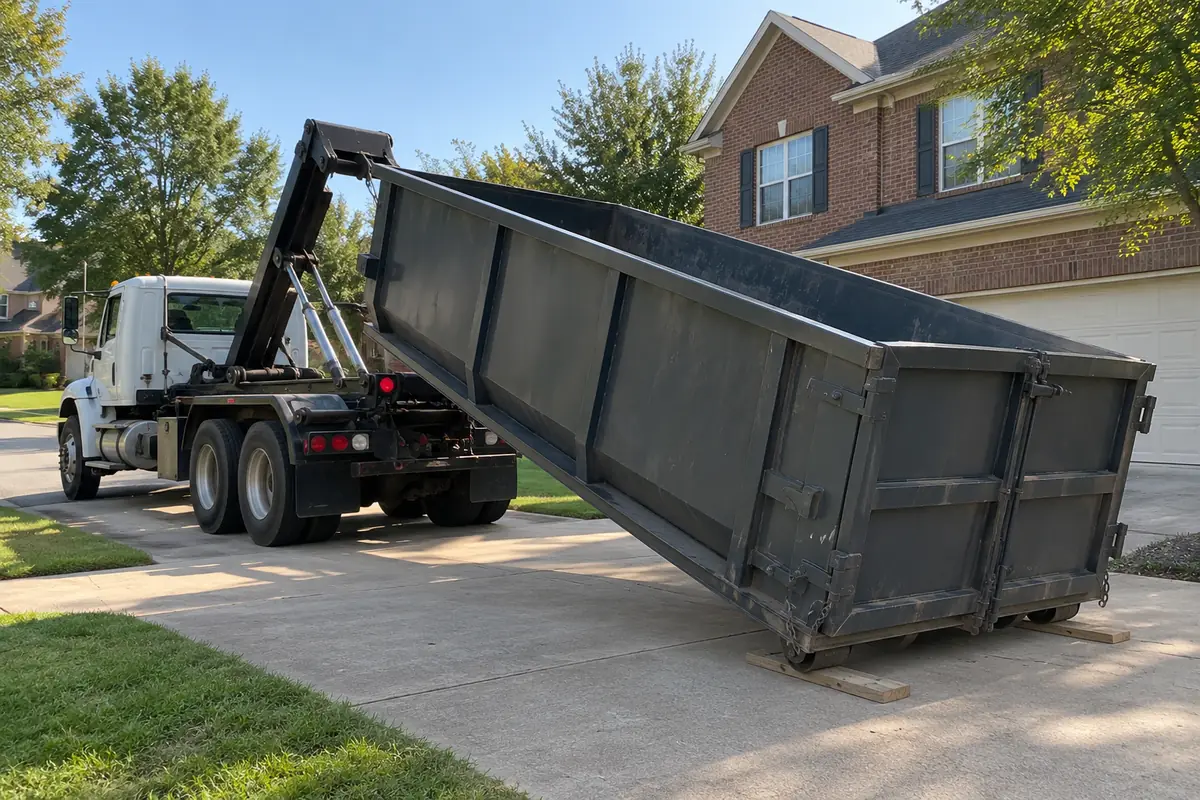
A roll-off truck is larger than a pickup and needs a straight approach to line up with the placement area. As a planning example, the truck and container may need roughly 60 feet of straight clearance, 10 to 12 feet of width and about 23 feet of overhead clearance. The actual requirement depends on the provider and truck. Move cars, trailers, carts and other obstructions before the scheduled window. Report low branches, wires, signs and tight turns so the route and placement can be reviewed safely.
The provider may use wood boards under the rails or wheels to spread the load; confirm the protection method for soft asphalt, pavers or a new driveway. Once the truck is positioned, the drop usually takes only a few minutes, though traffic, access and route conditions can change the timing. You may not need to be home if clear placement instructions are agreed in advance.
Loading it
Put dense items flat on the floor first, then work upward with lighter debris. Break down cabinets, boxes, furniture and long pieces so they stack instead of leaving large air pockets. Spread the load across the container and keep it level with or below the top rail. Never overfill, drape material over the sides or add a tarp that is not secured as the provider requires; an unsafe load may need to be corrected before pickup. Keep paint, fuel, tires, batteries, propane, refrigerant appliances and other prohibited items out. If the material is concrete, brick, dirt or shingles, mention it before loading because weight limits can matter before the container looks full. See the accepted and prohibited debris guide for the working list.
Pickup and swaps
Tell the provider when the container is nearly full or when the project is finished so pickup can be scheduled. If you need more days, ask before the quoted rental window ends; extra time and its terms should be confirmed before you extend the rental. For a long remodel or estate cleanout, ask whether a full container can be exchanged for an empty one. Swap timing, size and any added charge should be confirmed before the exchange.
Ready to request a free quote?
Call for a free quote. Tell us your town, the job and when you need a dumpster.
Next: choose a size · find project-specific loading tips · what goes in · common questions