
Short answer
- Household junk, furniture, remodel debris, roofing and yard waste are fine.
- Paint, fuel, tires, batteries, propane and refrigerant appliances are not.
- Clean concrete, brick and dirt are allowed, but only in the smallest container.
Most household cleanout material and common construction debris can go in a roll-off container, including furniture, drywall, lumber, flooring, shingles and ordinary yard debris. Hazardous, pressurized, refrigerant and regulated items follow a different disposal route. The exact list can vary by hauler, transfer station and landfill, so use the accepted and prohibited lists below as a starting point. Tell the hauler about unusual materials before they arrive, especially appliances, heavy masonry, soil or a mixed load. When in doubt, set the item aside until the hauler confirms it.
Usually accepted
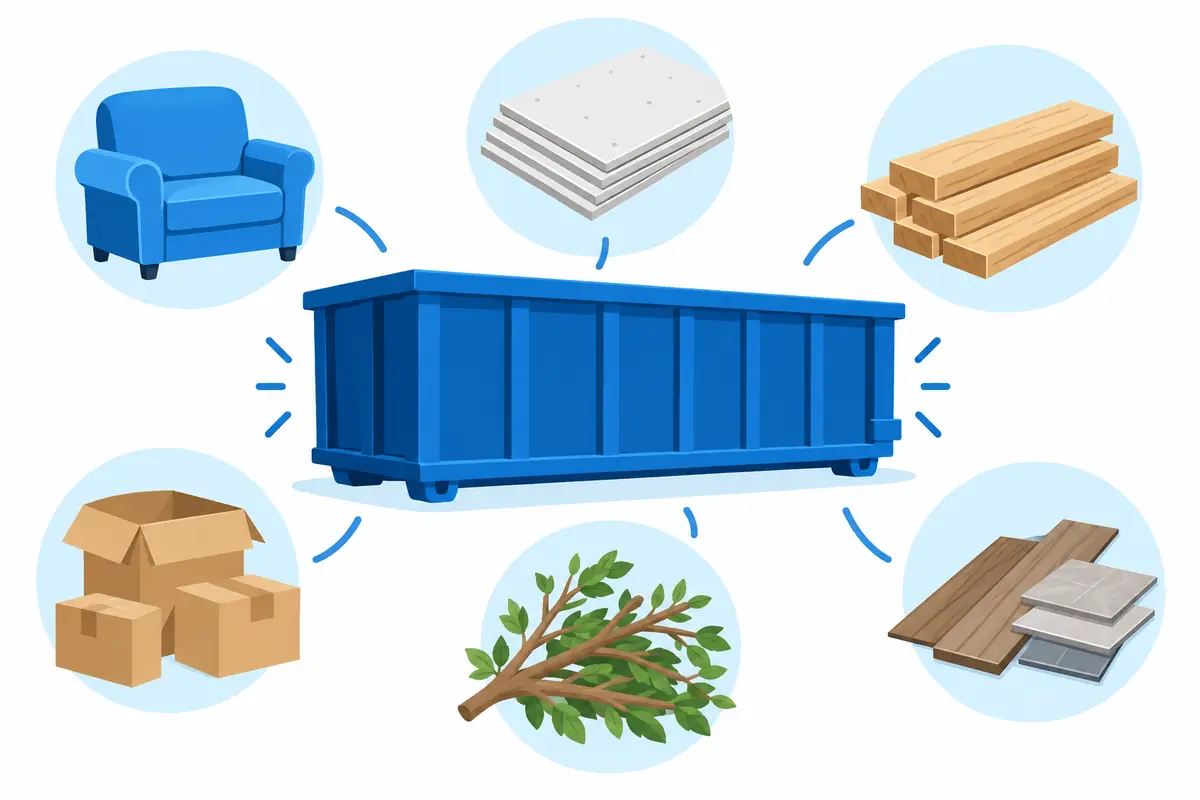
- Household junk and furniture
- Remodeling debris: drywall, lumber, cabinets, flooring
- Roofing shingles and felt
- Yard waste, branches and brush
- Carpet and padding
- Appliances without refrigerant (check with the hauler)
- Concrete, brick and dirt (clean loads only, in a 10 yard)
Kept out
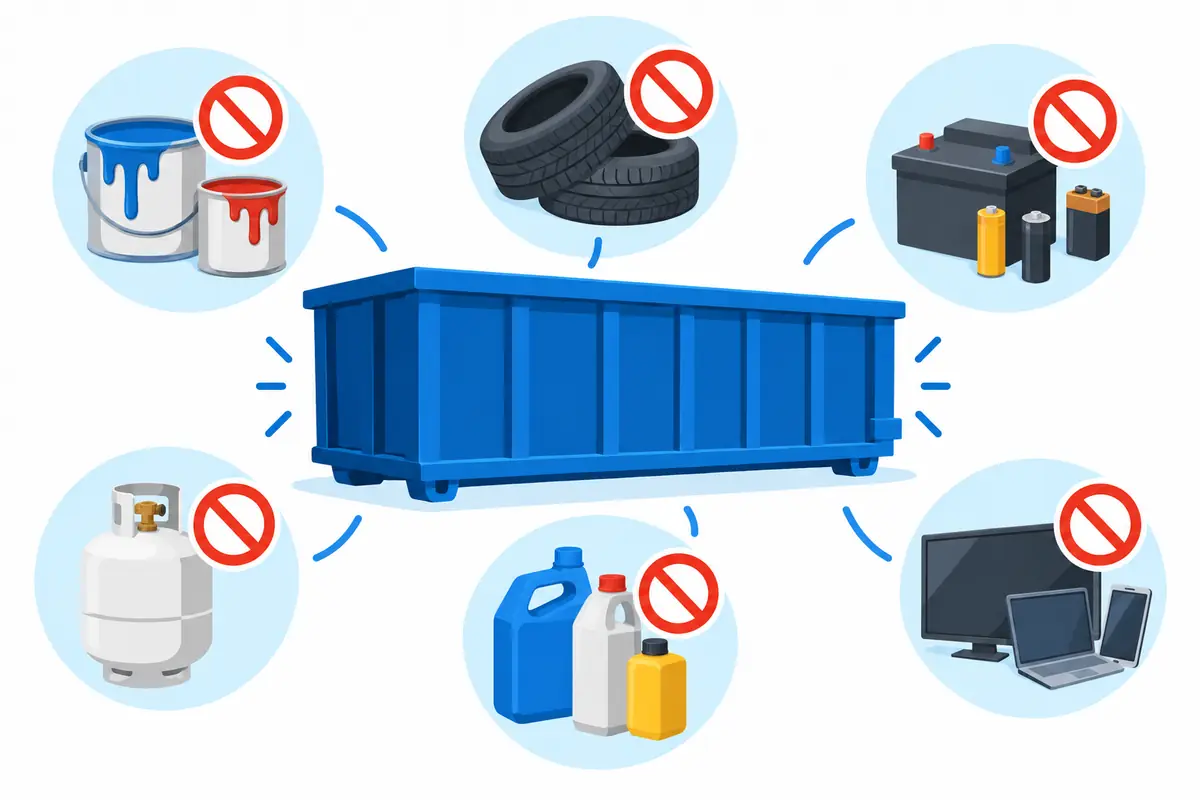
- Paint, stains and solvents
- Motor oil, fuel and antifreeze
- Car and truck tires
- Car batteries
- Propane tanks
- Refrigerators and A/C units with refrigerant
- Electronics and TVs (varies by hauler)
- Asbestos, medical waste and chemicals
Where the rest goes
Keep paint, solvents, oil, fuel, batteries, chemicals and similar household hazardous waste out of the container. RecycleSpot lets Kansas City area residents search by material and ZIP code for current household hazardous waste, electronics, tire, appliance and donation options. City and county programs also run collection events, while some retailers accept a narrow group of products through take-back programs. The Kansas City bulky-item page, Liberty trash and recycling page and Johnson County disposal directory provide local starting points. Confirm hours, residency, appointments, fees and accepted materials before you load or drive anything. The rental provider decides the final facility for rented-container debris.
Heavy debris rules
Concrete, brick and dirt can reach a weight limit before they fill much of the container. The size guide lists a 10 yard for clean heavy loads; ask the hauler to confirm the right container and allowance for your material. “Clean” means masonry or soil is kept free of household trash, wood, drywall and other mixed debris. Shingles are heavy as well, so describe the roof work and its approximate scale before booking. Mixing heavy debris with general junk can change the disposal route, allowed container and quote. Keep the load level and tell the hauler exactly what is going in so the weight rules are clear before work starts.
Need a dumpster in the Kansas City area?
Call for a free quote. Tell us your town, the job and when you need a dumpster.
Related: sizes and weight limits · how weight changes the bill